
ABOUT ENCEPHALITIS
Encephalitis is an inflammation and swelling of the brain. There are various causes of encephalitis in children, including viral infections (infectious encephalitis), or the body’s immune system incorrectly attacking the brain (auto-immune encephalitis). Less commonly bacteria, fungi or parasites can be the cause.
In children, the presentation of encephalitis initially can be non-specific. Encephalitis may start off with flu-like symptoms, such as a high temperature and headache. Other more serious symptoms may then develop, including confusion/disorientation, seizures, difficulty speaking, changes in personality and behaviour and feeling weak.
The incidence of encephalitis is reported to be approximately 10.5–13.8 per 100,000 children. This would be roughly 1-2 children per year in a district general hospital and 6-8 children per year in a regional neurosciences centre (large specialist hospital) (Kneen et al 2012).
Diagnosis
As part of the diagnostic process children may have:
- An EEG (electroencephalogram) – an EEG is a recording of brain activity where small sensors are attached to the scalp with a gel/glue to pick up the electrical signals produced by the brain; and/or
- A CT scan (computed tomography scan) of the brain; and/or
- MRI (magnetic resonance imaging) scan of the brain; and/or
- A lumbar puncture (also known as a spinal tap) – this is where a needle is inserted into the spinal canal to collect cerebrospinal fluid to check for infection in the brain or spinal chord; and/or
- Other blood tests may be carried out.
Treatment
Encephalitis needs urgent hospital treatment. Depending on the cause, treatment may include antiviral medication (such as acyclovir), steroids or antibiotics. Where children have autoimmune encephalitis, other treatments such as plasma exchange or intravenous immunoglobulins (IVIG) for auto-immune encephalitis may be considered. IVIG is a protein product derived from healthy blood donors. Children may also be given medications to control seizures.
Doctors, who treat children who present to hospitals acutely unwell, need to be aware of how to diagnose and treat encephalitis, as some causes of encephalitis respond better to specific treatments. Unfortunately, while in a small number of children and young people with encephalitis the outcome may lead to significant disability or death, generally the quicker the diagnosis and initiation of treatment, the potential better outcome for the child/young person. In other cases of encephalitis, recovery may be shorter and children may go on to appear to make a better initial recovery. For others who are more moderately or severely affected their recovery may take much longer and may present with more significant difficulties.
After Encephalitis
After the initial acute encephalitis illness, children can often look like they are making a good initial physical recovery, however, the impact of the inflammation to the brain can lead to an acquired brain injury (ABI). This is often considered a “hidden disability” – with physical and/or neurocognitive difficulties. This can leave the young person with significant differences in their brain, which – if left unaddressed – can lead to significant areas of difficulty across the individual’s life. It is therefore important to recognise this early and offer support. For this, referral to a Paediatric Neurology / Paediatric Neurodisability team with input from Paediatric Psychology can be important to recognise and support children and families.
Children with an ABI may present with difficulties later in childhood and adolescence when cognitive skills and abilities should be coming online. Children are initially likely to require intensive rehabilitation during their hospital stay – this may be from professionals such as a physiotherapist, occupational therapist (OT), and/or speech and language therapist (SaLT). Once a child is discharged from hospital they are likely to require ongoing input from community therapy teams that may include the above professionals. This will depend largely on the child’s outcome and ongoing needs.
Children may experience ongoing difficulties in the following areas:
- Motor functions
- Fine motor abilities
- Gross motor abilities
- Speech, Language & Communication
- Fatigue
- Emotions
- Behaviour
- Cognition & Learning
- Attention/Concentration
- Processing Speed
- Executive Function
- Memory
- Seizures
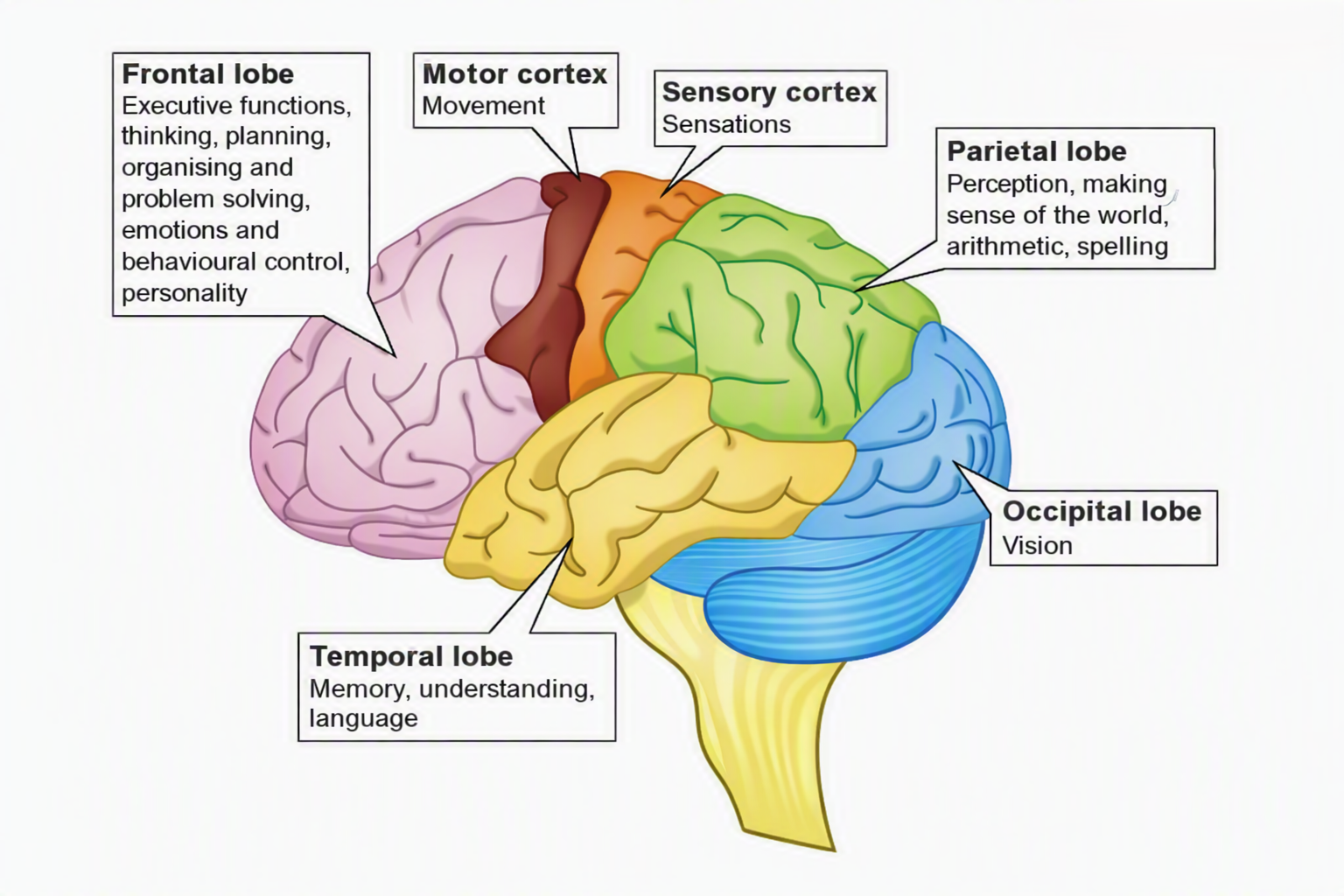
These areas of difficulty may be related to injury to a specific area of the brain such as those detailed in the picture above. It is important to recognise, however, that in a young developing brain these difficulties may emerge due to changes/disruptions to the connections within the brain as the child is developing/growing throughout childhood and adolescence. This is why children/adolescents may present with difficulties that emerge over time, as years later – when abilities and skills should be developing – the injury to the brain may result in a delay or disruption to specific skills and abilities being developed. Children may therefore present with a patchy profile of specific areas of strength and difficulty which may relate to a number of factors such as age at time of encephalitis, access to treatment and rehabilitation, and any ongoing physical/neurological conditions such as seizures/epilepsy. For more information on this, please see our About ABI page.
Rehabilitation
As indicated above, following their initial Encephalitis illness it is likely that children will need intensive rehabilitation in the hospital. This may be provided by a number of health professionals including physiotherapy, occupational therapy, speech and language therapy, play specialists, paediatricians, clinical psychologists and/or neuropsychologists. Following discharge from hospital, children may have support from these professionals within the community/local health services. These professionals may also come into school to see your child and the educational professionals supporting the child.
When children are considering returning to school it is important to meet with the school to update on the child’s illness and review any additional needs that the child may have. A phased return to school may be beneficial, where children initially return on a part-time timetable, before gradually increasing their time in school to full-time. Children are likely to be fatigued in the early stages of their recovery. They may therefore need some time to get back to their previous hobbies and activities. Where children have extensive additional needs, liaison with the local education authority may be required to consider any additional funding/provision that is required to support the child’s return to school. Training for schools on acquired brain injury would be beneficial when a child is returning to education. Please see our Returning to Education page for more information.
Please contact us for any further information.
We have produced our ‘Getting to Know Childhood Encephalitis’ Guidebook – an incredibly helpful and detailed booklet explaining much about Childhood Encephalitis, including steps you can take following a diagnosis. To download yours click here, or to order hard copies for yourself, school or surgery/hospital please email contact@edendoratrust.org.
Information written by the Eden Dora Trust together with two of our incredible Advisory Panel members: Dr Emily Talbot [1] and Dr Santosh Mordekar [2]
[1] Consultant Clinical Psychologist in Paediatric Neuropsychology, Nottingham University Hospitals NHS Trust
[2] Consultant Pediatric Neurologist & Clinical Lead for Child ITB, Movement and Spasticity Service, South Yorkshire
© 2026. All Rights Reserved. The Eden Dora Trust for children with Encephalitis. Registered Charity Number: 1152507
Privacy Policy